
The best lump charcoal for a long smoke is a dense, large-piece bag such as Jealous Devil Chunx XL or FOGO Super Premium, and the best charcoal briquettes for most kettle cooks are still Kingsford Original. Lump suits a kamado, where clean air and little ash matter most. Briquettes suit a kettle or a bullet, where an even, predictable burn is the point.
Quick picks
- Best lump for long cooks: Jealous Devil Chunx XL
Dense quebracho, 35 lb. $52.99 on 18 November 2026, about $1.51 a pound.
- Big pieces, sold by Amazon: FOGO Super Premium
Central American hardwood, 35 lb. $55.95, about $1.60 a pound.
- Milder Missouri hardwood: Rockwood
Oak, hickory, and cherry. Two 20 lb bags, $79.95, about $2.00 a pound.
- Oak lump, small bag: B&B
10 lb of oak lump. $26.33, about $2.63 a pound.
- Best briquettes: Kingsford Original
16 lb, $10.92, sold by Amazon.com, about 68 cents a pound.
- Natural briquettes: Royal Oak
15.4 lb, $28.99, about $1.88 a pound on Amazon.
Best lump for long cooks
Jealous Devil Chunx XL
For a ceramic cooker running a brisket or a pork butt overnight, and for anyone who wants big, dense lumps that last and leave little ash.
Why you'd buy it. Jealous Devil is made from South American quebracho blanco, one of the densest hardwoods sold as charcoal. Dense wood makes dense charcoal, and dense charcoal burns longer at a given vent setting. The listing says over 1100°F for searing, a 4+ hour open burn, and a 20+ hour burn with low oxygen, which is how a sealed ceramic cooker runs. It also says minimal ash and resistance to sparking. Chunx XL is the large-piece bag, so less of it falls through the grate as dust. That combination is why it is such a common bag beside a ceramic cooker.
Why you wouldn't. Dense wood takes longer to catch than lighter lump. If you grill burgers on a weeknight and want coals fast, a lighter bag is easier. And 35 pounds is a lot of charcoal to keep dry if you only light the grill a few times a season.
Price and value. $52.99 for 35 pounds on 18 November 2026, about $1.51 a pound, shipped and sold by Spreetail. FOGO's 35 pound bag was $55.95 the same day. On a ceramic cooker, you often relight the leftover lump for the next cook, so a dense bag goes further than its weight suggests.
How it compares. FOGO is the close rival: similar bag, larger pieces on average per the listing, and Amazon as the seller. Rockwood is a lighter, milder North American hardwood at a higher price per pound. Kingsford briquettes cost far less per pound and burn more evenly, at the cost of much more ash.
Pros
- Dense quebracho for a long, steady burn, per the listing.
- About $1.51 a pound, the lowest lump price on this page.
- Large pieces and minimal ash suit a sealed ceramic cooker.
Cons
- Slower to light than lighter lump.
- Sold by Spreetail, a third-party seller, and the seller can change.
- Burn times are the maker's claims. Your vents decide the real number.
| Wood | Quebracho blanco, South America |
|---|---|
| Bag | 35 lb, resealable |
| Seller | Shipped and sold by Spreetail |
| Price | $52.99 on 18 November 2026, about $1.51 a pound |
Bottom line. This is the lump I would put in a ceramic cooker for an all-night packer. It was $52.99 for 35 pounds on 18 November 2026, shipped and sold by Spreetail, about $1.51 a pound. That is the lowest price per pound for lump on this page, for the densest wood.
Milder Missouri hardwood
Rockwood lump charcoal
For a cook who wants North American hardwood lump with a milder smell, sold by the company that makes it, and who will use 40 pounds.
Why you'd buy it. The listing says Rockwood is made from Missouri oak, hickory, and cherry, with minimal ash and recyclable packaging. That's the same family of woods a lot of cooks already use for smoke, so the charcoal itself stays in the background. It is also sold by the maker, which takes the third-party seller question off the table. If you like knowing where your charcoal came from, this is the bag.
Why you wouldn't. It costs about $2.00 a pound, and the smallest bundle on this listing is 40 pounds. North American hardwood is lighter than quebracho, so a basket burns down sooner at the same vent setting.
Price and value. $79.95 for 40 pounds on 18 November 2026, about $2.00 a pound, sold by The Saint Louis Charcoal Co / Rockwood Charcoal. That is about 49 cents a pound more than Jealous Devil.
How it compares. Jealous Devil and FOGO are denser and cheaper per pound. B&B is an oak lump in a small bag. Rockwood is the North American wood choice, sold by the maker, at a premium.
Pros
- Missouri oak, hickory, and cherry, per the listing.
- Sold by the company that makes it.
- Minimal ash and recyclable bags, per the maker.
Cons
- About $2.00 a pound, more than the imported dense lump.
- 40 pounds is the smallest bundle on this listing.
- Lighter wood burns down sooner than quebracho at the same vent setting.
| Wood | Oak, hickory, and cherry, Missouri |
|---|---|
| Bag | Two 20 lb bags, 40 lb |
| Seller | Sold by The Saint Louis Charcoal Co / Rockwood Charcoal |
| Price | $79.95 on 18 November 2026, about $2.00 a pound |
Bottom line. The milder hardwood pick. It was $79.95 for two 20 pound bags on 18 November 2026, sold by The Saint Louis Charcoal Co, Rockwood's maker, about $2.00 a pound. You pay more per pound than the South and Central American bags for a Missouri oak, hickory, and cherry blend.
Oak lump, small bag
B&B oak lump charcoal
For a cook who wants oak lump in a bag small enough to try once, and for a firebox where you add charcoal under oak splits.
Why you'd buy it. B&B is a Texas charcoal brand, and the listing names oak as the charcoal type. Oak lump smells like the post oak that Central Texas pits burn, and a 10 pound bag is small enough to try once. In a stick-burner, a bed of oak lump under the first splits gets the fire going without lighter fluid.
Why you wouldn't. At about $2.63 a pound on this listing, it is expensive for lump. The listing is also thin on details: the title gives the weight in grams, 4540, which is 10 pounds, and the only bullets are a sear claim and the charcoal type.
Price and value. $26.33 for 10 pounds on 18 November 2026, shipped and sold by MaxWarehouse. That is a lot more per pound than the 35 pound bags. A two-pack, 20 pounds, was $52.99 on another listing the same day, which is no cheaper per pound.
How it compares. Jealous Devil and FOGO cost much less per pound and come in bigger bags. Rockwood is North American hardwood sold by its maker. B&B is the one to buy when you want oak and a small bag.
Pros
- Oak lump, the same wood a Texas pit burns.
- A 10 pound bag is a small first purchase.
- A good starter bed under oak splits.
Cons
- About $2.63 a pound, the highest lump price here.
- The listing gives the weight in grams and says very little else.
- A third-party seller is on the offer.
| Wood | Oak |
|---|---|
| Bag | 10 lb (4540 g in the title) |
| Seller | Shipped and sold by MaxWarehouse |
| Price | $26.33 on 18 November 2026, about $2.63 a pound |
Bottom line. The small-bag oak pick. It was $26.33 for 10 pounds on 18 November 2026, shipped and sold by MaxWarehouse, about $2.63 a pound. That is the highest lump price per pound here. Buy it to try oak lump, not to stock up.
Best briquettes
Kingsford Original
For a kettle cook, a bullet smoker, or anyone following a recipe that counts briquettes, who wants the same fire every time at the lowest price.
Why you'd buy it. Briquettes are the same shape and density every time, so 50 briquettes today is the same fire as 50 briquettes next month. That is why so many kettle recipes and the snake method count them. The listing says Kingsford Original is ready in about 15 minutes, with grooves on each briquette for faster lighting, made in the USA from wood left over from mills. It is also sold by Amazon.com.
Why you wouldn't. Briquettes make a lot more ash than lump. On a long cook in a small firebox, that ash can choke the fire if it builds up. Kingsford also includes binders and fillers, which some cooks would rather not burn. The smell when they first light is stronger than lump, so wait until they are ashed over before the food goes on.
Price and value. $10.92 for 16 pounds on 18 November 2026, about 68 cents a pound. Nothing else on this page is close. A 35 pound bag of lump costs about the same as five of these bags.
How it compares. Royal Oak's natural briquettes are the additive-light alternative, at about $1.88 a pound on Amazon. Any lump on this page makes less ash, answers the vents faster, and costs two to four times as much per pound.
Pros
- About 68 cents a pound, shipped and sold by Amazon.com.
- Even, repeatable burn, so a count of briquettes means the same fire every time.
- Ready in about 15 minutes, per the listing.
Cons
- Much more ash than lump.
- Binders and fillers, which some cooks prefer to avoid.
- A stronger smell at first light, so let them ash over before cooking.
| Type | Briquettes |
|---|---|
| Bag | 16 lb |
| Seller | Shipped and sold by Amazon.com |
| Price | $10.92 on 18 November 2026, about 68 cents a pound |
Bottom line. The briquette pick. It was $10.92 for 16 pounds on 18 November 2026, shipped and sold by Amazon.com, about 68 cents a pound. It is less than half the price per pound of any lump here, it burns evenly, and it is the briquette most charcoal recipes assume.
Natural briquettes
Royal Oak natural premium briquettes
For a cook who wants the even burn of briquettes from a bag sold as natural, and who will pay more for it.
Why you'd buy it. Royal Oak sells this bag as natural premium briquettes. The listing says they are ready to cook in 15 minutes and have ridges for better airflow. Hobbyist burn tests, such as a long-running Smoking Meat Forums thread, have compared Royal Oak's ridged briquettes with Kingsford for temperature, time, and ash. That's one cook's test, not a lab, but it is the kind of side-by-side that a lot of briquette buyers read.
Why you wouldn't. At about $1.88 a pound on Amazon from a third-party seller, it costs almost three times as much as Kingsford Original. Briquettes are heavy and cheap to make, so a big markup for shipping is common online.
Price and value. $28.99 for 15.4 pounds on 18 November 2026, about $1.88 a pound. That is close to FOGO's lump price per pound.
How it compares. Kingsford is the budget briquette and the one recipes are built around. Royal Oak is the natural option. Lump costs about the same on Amazon and makes less ash, if an even burn is not your priority.
Pros
- Sold as natural premium briquettes, with airflow ridges.
- Ready in about 15 minutes, per the listing.
- The even burn of a briquette.
Cons
- About $1.88 a pound on Amazon, nearly three times Kingsford.
- A third-party seller on the offer.
- Still more ash than lump, as with any briquette.
| Type | Briquettes |
|---|---|
| Bag | 15.4 lb |
| Seller | Shipped and sold by BrandNewEngines, Inc |
| Price | $28.99 on 18 November 2026, about $1.88 a pound |
Bottom line. The natural briquette pick, with a caveat about the price. It was $28.99 for 15.4 pounds on 18 November 2026, shipped and sold by BrandNewEngines, Inc, about $1.88 a pound. On Amazon that is close to lump prices. If a local store carries the same bag, it is usually the better place to buy heavy charcoal.
Comparison
All prices are the Amazon featured offer on 18 November 2026. They move, and third-party sellers change, so check the price at checkout.
| Charcoal | Type and wood | Bag | Price and per pound |
|---|---|---|---|
| Jealous Devil Chunx XL | Lump, quebracho | 35 lb | $52.99, about $1.51/lb |
| FOGO Super Premium | Lump, Central American hardwood | 35 lb | $55.95, about $1.60/lb |
| Rockwood | Lump, Missouri oak, hickory, cherry | 2 x 20 lb | $79.95, about $2.00/lb |
| B&B oak lump | Lump, oak | 10 lb | $26.33, about $2.63/lb |
| Kingsford Original | Briquettes | 16 lb | $10.92, about $0.68/lb |
| Royal Oak natural briquettes | Briquettes | 15.4 lb | $28.99, about $1.88/lb |
How the list was chosen
These are the bags most cooks reach for when they want a lump fire they can trust: dense imported lump for a long night in a ceramic cooker, North American hardwood for a milder smell, and a small bag of oak to try. On the briquette side, Kingsford is the bag most recipes are written around, and Royal Oak is the natural alternative. Every pick had a featured offer on Amazon and a price on the page when I checked on 18 November 2026. Kamado Joe's Big Block XL had no offer you could add to a cart that day, so it has no button. The Royal Oak lump listing I found was an 8.8 pound bag at $37.49, more than $4 a pound, so I left it out.
Burn times, piece sizes, and ash claims come from each maker's listing and are labeled that way. I haven't weighed the ash or timed these bags side by side, so there is no score.
Lump vs briquettes
Lump charcoal is wood burned without much air until what is left is mostly carbon. It comes out of the bag in the shape of the wood, from dust to fist-sized pieces. Briquettes are charcoal ground up, mixed with a binder such as starch, often with other fillers, and pressed into the same pillow shape every time. NPR's piece on the charcoal debate sums up the trade: lump can burn hotter and makes less ash, and briquettes burn more consistently. Meathead tells NPR that the wood you add on top matters more for flavor than which charcoal is underneath.
| Lump | Briquettes | |
|---|---|---|
| Heat | Can run hotter, and responds faster to the vents | Steady, a little cooler at peak |
| Lighting | Catches quickly. FOGO says about 15 minutes. Dense quebracho is slower | Kingsford and Royal Oak both say about 15 minutes |
| Burn time | Depends on the wood. Dense lump in a sealed cooker lasts a long time | Even and predictable. Recipes count briquettes for this reason |
| Ash | Little | A lot. It can choke a small firebox on a long cook |
| Consistency | Varies piece to piece and bag to bag | The same every time |
| Cost per pound on Amazon here | About $1.51 to $2.63 | About $0.68 to $1.88 |
| Best cooker | Kamado and other sealed ceramic cookers | Kettle and bullet smokers |
Lump
Lump is the fuel for a cooker where the vents are the control and ash has nowhere to go. It lights fast, it gets hot when you open the vents, and it settles when you close them. The catch is that every bag is a little different. One bag is mostly big pieces, the next has more small pieces and dust. The same vent setting will not always give the same temperature, so watch a probe at the grate for the first hour.
Pros
- Lights fast and responds quickly to the vents.
- Little ash, which matters on a long cook in a sealed cooker.
- Leftover lump can be relit for the next cook.
Cons
- Piece size varies by bag, so the fire is less predictable.
- Costs two to four times as much per pound as Kingsford.
- Small pieces and dust at the bottom of a bag can block airflow.
Briquettes
Briquettes are the fuel for a cook who wants the same fire twice. They are uniform, so a count means a known amount of heat, and they burn down at a steady rate. That is why kettle recipes and the snake method are written in briquettes. The tradeoff is ash, and with ordinary briquettes, the binders and fillers that make the shape.
Pros
- Even and repeatable. A count of briquettes is a known fire.
- Much cheaper per pound.
- Easy to arrange in a ring or a basket.
Cons
- Much more ash, which can choke the fire on a long cook.
- Binders and fillers, and a stronger smell at first light.
- Slower to respond when you change the vents.
Which charcoal for which cooker
Kamado
A kamado is a sealed ceramic cooker, and that changes the math. Very little air gets in, so a basket of lump burns slowly, and the ash has nowhere to go. That's why almost every kamado maker tells you to use lump. I cook on a Kamado Joe, and a basket of dense lump with a few chunks of wood on top is the whole fuel plan for a packer. Fill the basket, light one spot, and let it come up slowly. It is much easier to bring a kamado up to 250°F than to bring it back down from 350°F.
Pros
- Lump's low ash keeps the airflow clear over a long cook.
- Dense lump plus a sealed lid can run all night on one basket.
Cons
- Briquette ash can clog the fire grate in a ceramic cooker.
- Overshoot the temperature and it takes a long time to come down.
Kettle
A kettle is where briquettes earn their place. Set up two zones, or a snake of briquettes around the edge with a few chunks of wood, and the burn is predictable enough to follow a recipe. Lump works too, and it is better for a hot sear, but the steady burn of briquettes is easier to manage on a low-and-slow cook when air leaks in around the lid.
Pros
- Briquettes in a snake give a slow, steady burn for hours.
- Recipes written for this grill count briquettes, so you can follow them.
Cons
- Ash builds up in the bowl on a long cook.
- Lump burns faster here than in a sealed ceramic cooker.
Offset
An offset burns wood. Charcoal is the starter bed and the backup. A chimney of lump or briquettes under the first splits gets the fire going, and after that the splits carry the cook. Oak lump, such as B&B, keeps the flavor close to the post oak most offset cooks burn. The wood itself is on best wood for brisket.
Pros
- A bed of charcoal gets the splits burning clean, fast.
- Oak lump keeps the flavor close to the oak splits.
Cons
- Charcoal alone runs out fast in a big firebox.
- Expensive lump is wasted as a starter bed. A cheaper bag works.
Bullet smoker
A bullet, the upright water smoker with a charcoal ring at the bottom, is built around the Minion method: a ring of unlit briquettes with a few lit ones on top, so the fire spreads slowly over many hours. Briquettes are the usual fuel because they burn so evenly. Lump works if you like it, but it burns faster and less predictably in that ring.
Pros
- Briquettes spread slowly through the ring for a long, even cook.
- Kingsford's low price per pound makes a full ring cheap.
Cons
- Ash builds up under the ring on a very long cook.
- Lump burns faster here and is harder to hold steady.
What to look for in a bag
Piece size. Big pieces burn longer and let air through. A bag that is mostly small pieces and dust burns fast and can choke the fire. Large-piece bags, such as Jealous Devil Chunx XL and FOGO, are worth paying a little more for on a long cook.
Density. Dense wood makes dense charcoal that lasts longer at the same vent setting. Quebracho is the dense end. North American oak and hickory are lighter.
Ash. Lump makes less ash than briquettes. If your cooker is sealed, ash matters more than heat.
Price per pound, and where you buy it. Charcoal is heavy, and heavy things are expensive to ship. Compare the price per pound, not the price per bag. A local hardware store is often the better place for the cheap, heavy bags.
Smell when lit. Lump should smell like a wood fire. Briquettes smell stronger when they first catch. Either way, let the fire settle and the smoke thin before the meat goes on.
Light it clean, keep it dry
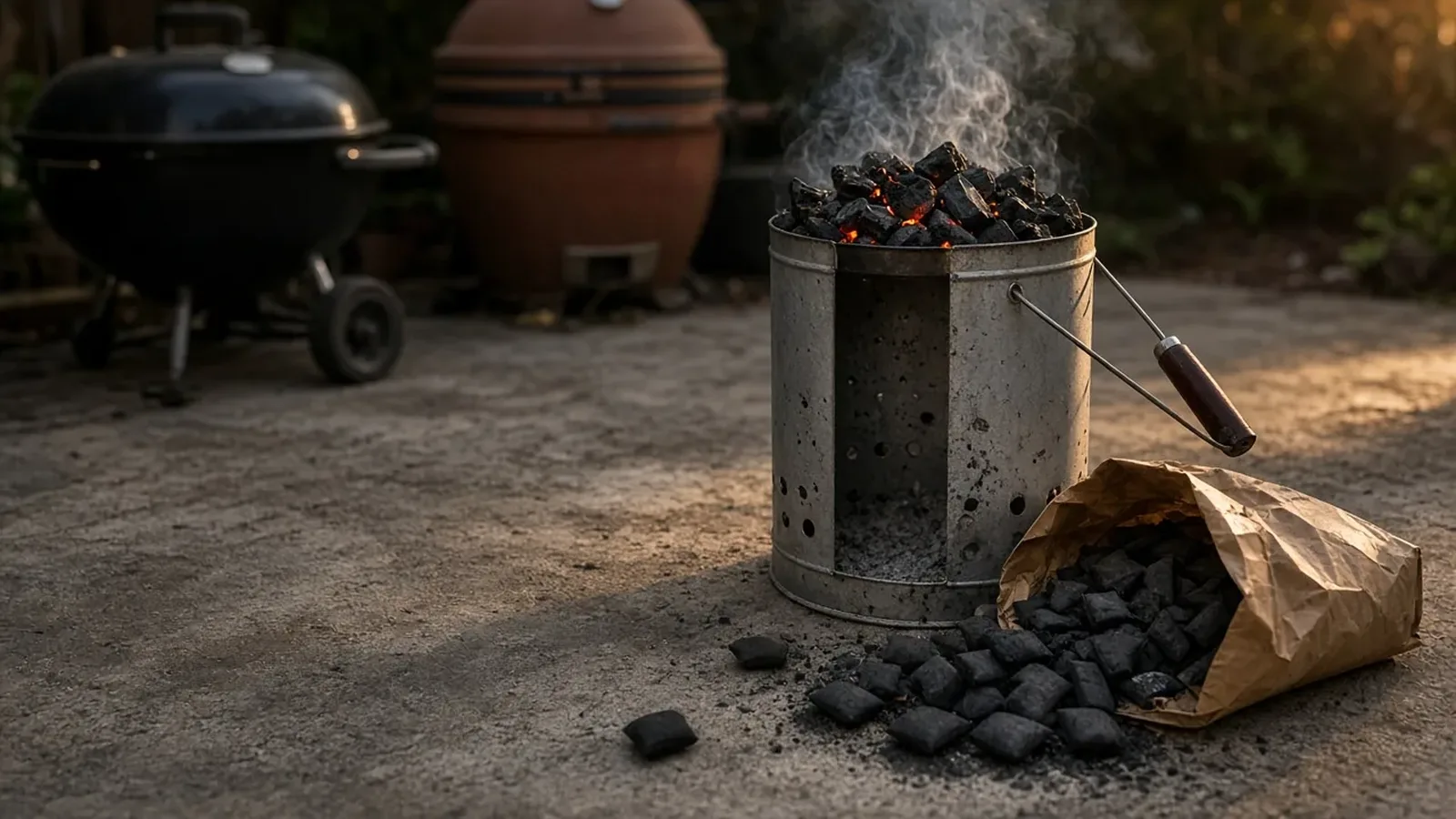
Use a chimney starter or a natural fire starter, not lighter fluid. A chimney gets lump or briquettes going in about 10 to 20 minutes, and you pour the coals in when the top pieces start to ash over. Keep opened bags sealed and off the concrete. Damp charcoal is hard to light and smokes badly.
Leftover lump in a kamado can be relit. Shake the ash through the grate, stir the old pieces, and add fresh on top. The rest of the fuel on this site, from chunks of wood to pellets and pink butcher paper, is on fuel and consumables. The cook that has to last through all this charcoal is on how to smoke a brisket, and the salt-and-pepper bark it should end with is the brisket rub. Read the grate temperature from a probe, not the dome gauge. The probes are on thermometers.