
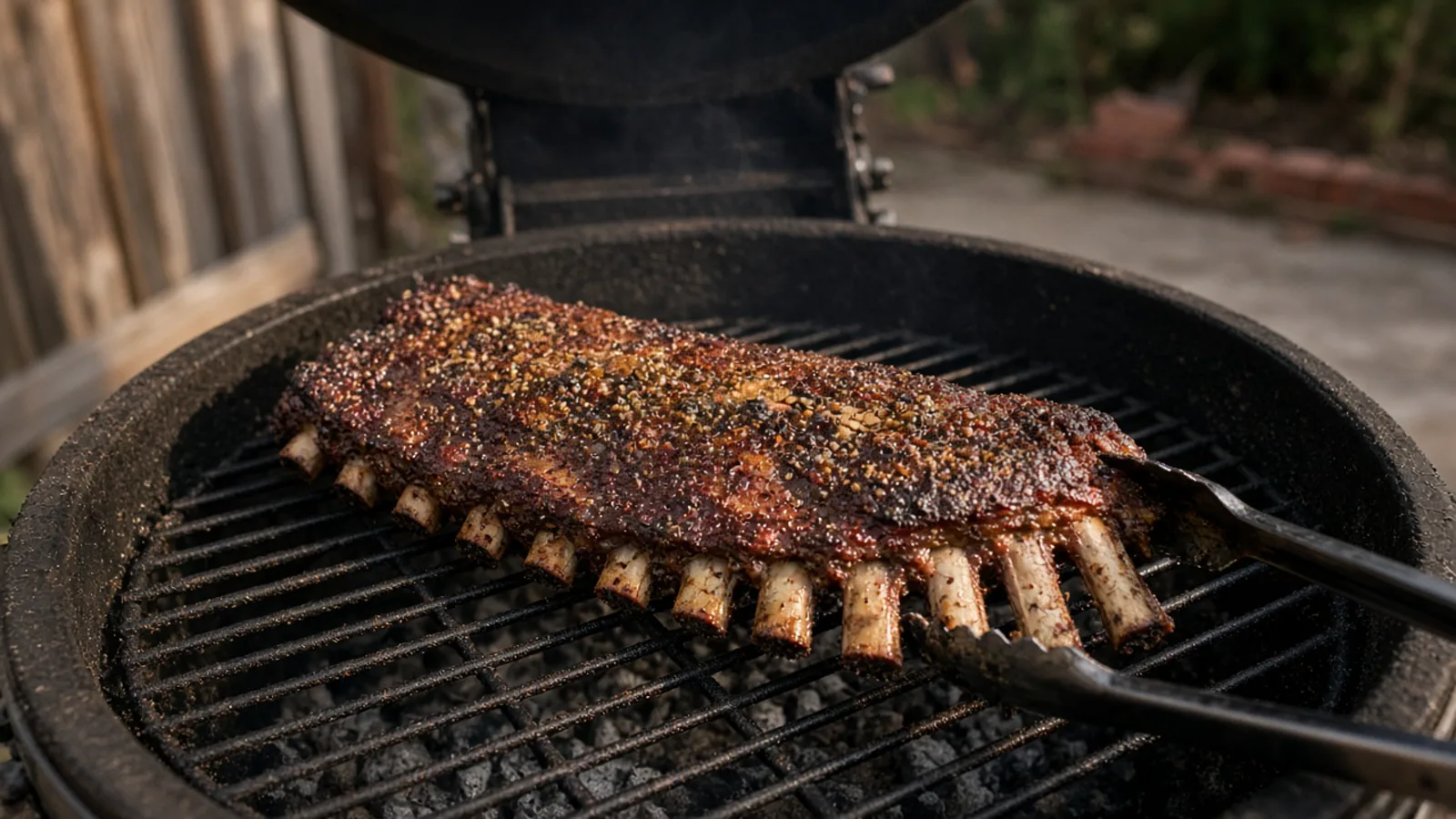
The 3-2-1 ribs method is three hours unwrapped, two hours wrapped, and one hour back on the pit, at 225°F at the grate. That six-hour clock is a spare-rib plan, and you leave it the moment the rack bends and the surface cracks.
The steps
These are the spare-rib steps at 225°F. The shorter clocks are below, and you use the same motions with different hours. The trim, the wood dose, and the full unwrapped windows live on how to smoke ribs.
- Pat the rack dry and pull the membrane off the bone side. Slide a butter knife under one end, grip it with a paper towel, and peel. Season both sides with the dry rub for ribs on spares, or the baby back ribs dry rub on the smaller racks. The meat should still show through the spices.
- Settle the pit before the meat goes on. When this page says 225°F, it means a probe at grate level. The thermometer in a kamado lid sits up in the dome and usually reads hotter. Put the racks meaty side up, over indirect heat, and leave room between them.
- Smoke them unwrapped for 3 hours. That first block is the smoke and the color. Peek if you need to. A lid left open is a fire that has to recover, and the clock slides with it.
- Wrap the rack tight in foil with a small splash of apple juice or cider, about an ounce. Two hours is the spare-rib number on this clock. Lift a corner partway through. If the surface already wants to crack, the wrap is over, even if the timer is not.
- Unwrap and put the rack back on the pit, meaty side up, for about an hour. If you want sauce, paint a thin coat in the last 15 minutes and watch it. The sugar goes from glazed to black in a hurry.
- Rest about 15 minutes, then slice between the bones. A pink line under the bark is the smoke ring. It is color from the fire, and it is still there on a rack that already passed the bend test.
Times and temperatures
Steven Raichlen's 3-2-1 write-up runs the smoke at 225°F, wraps with a little liquid such as apple cider, and uses the last hour to set a glaze. He treats spare ribs and a St. Louis cut as the classic rack for the full clock, and he tells you to shorten the wrap on baby backs. A steady grate matters more than chasing a single internal number.
Amazing Ribs' smoked rib method is the unwrapped comparison on this site: baby backs in about 3 to 5 hours, spares and a St. Louis cut in about 5 to 7, at about 225°F, and they would rather see about an hour of foil than two. I keep 3-2-1 here because it is the plan a lot of cooks are already running. It works as a spare-rib start if you open the packet when the rack bends.
| Clock | Unwrapped | Wrapped | Finish | The rack it fits |
|---|---|---|---|---|
| 3-2-1 | 3 hours | up to 2 hours | about 1 hour | Spare ribs and a St. Louis cut |
| 2-2-1 | 2 hours | up to 2 hours | about 1 hour | Baby backs that still want a long steam |
| 3-1-1 | 3 hours | about 1 hour | about 1 hour | A firmer bite, and a hotter grate |
| 2-1-1 | 2 hours | about 1 hour | about 1 hour | Baby backs when bark matters |
| Unwrapped | The whole cook | none | the bend test | Bark, on either cut |
At 250°F every one of those blocks finishes sooner. Start the bend test before the 225°F window is up. A hot spot is a different problem from a hotter average. Move the dark end, or ease the vent, before you blame the rub.
Spare ribs on 3-2-1
Spare ribs run down the belly. More fat, more meat between the bones, and enough thickness to survive a two-hour steam. A St. Louis cut is that spare with the flap and the rib tips trimmed so the rack is a rectangle that bends in one arc. Raichlen calls 3-2-1 the baseline for both. At 225°F you are planning on about six hours, and you are allowed to eat sooner.
Pros
- Spares get a written six-hour schedule when you want them tender and you do not want to guess the wrap.
- The last unwrapped hour puts some crust back and gives you a window for sauce.
Cons
- Two hours in foil steams the bark, and a splash of liquid washes rub into the bottom of the packet.
- A rack that already bends in the wrap gets softer if you wait out the timer.
The rub for this cut is the dry rub for ribs. The sugar is there to brown a rack that is only in the heat for a few hours. The same sweetness on a packer has all day to turn bitter, which is why the brisket rub leaves it out.
Baby backs on the full clock
Baby backs sit along the loin. The rack is shorter, curved, and leaner, and Amazing Ribs puts an unwrapped one at about 3 to 5 hours. The full 3-2-1 is still six hours, with two of them in foil. That is a common way to cook a baby back until the meat slides off and the bark is gone. Raichlen says the same thing in shorter words: shorten the wrapped stage, and use 2-2-1 or even 2-1-1 so the lean meat does not go soft.
Pros
- A baby back still takes smoke and color in the first hours, and the rack fits a kamado grate without a rib stand.
- If the table wants the soft, sauced plate, the full clock will get a small rack there.
Cons
- There is less fat between the bones, so a two-hour steam dries the lean meat and then turns it soft.
- The bend often shows up before hour six, and the last hour is extra heat on a rack that is already done.
Season a baby back with the baby back ribs dry rub. One rack takes about half the cup. A thin grocery rack has less meat over the bones. The clock will not add what the butcher left on the loin.
The 2-2-1 method
2-2-1 is two hours unwrapped, up to two hours wrapped, and about one hour back on the pit. The first block matches the short end of the unwrapped baby-back window, which is why people run it on the smaller rack. It is still about five hours at 225°F, and it is still a clock. Open the foil when the surface wants to crack.
Pros
- Baby backs get a shorter smoke stage, so the sugar browns without sitting through a spare-rib first block.
- You still have a written wrap and a last hour for sauce.
Cons
- Two hours wrapped is still a long steam on a lean rack. The bark softens the same way it does on 3-2-1.
- A thin baby back can be done in the wrap. The one-hour finish is optional once the bend is there.
The 3-1-1 method
3-1-1 keeps the three-hour smoke and cuts the wrap to about an hour, then finishes unwrapped for about an hour. Raichlen's note for a meaty rack is the same shape: keep the smoke, shorten the wrap before you shorten the smoke. Amazing Ribs will stand behind about an hour of foil, and they are blunt that two hours, especially with liquid in the packet, is how pork ribs go mushy. This is the clock I would hand someone who wants a spare rib with more bark and a tug when they bite.
Pros
- One hour in foil moves a tight spare along without boiling it for the whole afternoon.
- The three-hour smoke has time to set color before the packet goes on.
Cons
- A stubborn spare can still be tight after one wrapped hour. You stay on the pit until the bend shows, and dinner slides.
- There is less steam to forgive a grate that ran hot and dried the edges in the first block.
If the bark is the thing you are protecting, pink butcher paper is the kinder hour. Foil is the faster steam. The difference, on any cook long enough to wrap, is butcher paper vs foil.
The 2-1-1 method
2-1-1 is Raichlen's shorter baby-back schedule: two hours unwrapped, about one hour wrapped, and about one hour back on indirect heat. It is the 3-1-1 idea on the smaller rack. Four hours is the plan at 225°F. The bend test can end it in the middle of the wrap, the same way it can end every other clock on this page.
Pros
- A baby back gets smoke, a short push, and a finish, inside an afternoon.
- One hour wrapped is the foil length Amazing Ribs will stand behind, so the lean meat has less time to turn soft.
Cons
- A meaty spare is usually still tight at the end of this clock. That rack wants 3-2-1 or 3-1-1.
- You have to look. A four-hour timer will not tell you the thin end of a grocery rack is already bending.
Unwrapped ribs
Leaving the racks open is the Amazing Ribs backyard plan, and it is the one to run when the bark is the point. Baby backs sit in a 3 to 5 hour window. Spares and a St. Louis cut sit in a 5 to 7 hour window. Both are at about 225°F, unwrapped, and both end on the bend. There is no packet to open and no liquid to measure.
Pros
- The surface keeps drying in the pit air, so the crust you set in the first hour is the crust you slice.
- You skip the moment where a long wrap turns a good rack into mush.
Cons
- Spares can sit at the long end of 5 to 7 hours, and a stubborn rack can run past it.
- There is no foil lever if the meat is still tight and dinner is close. A hotter grate is the rougher fix, and the sugar will darken with it.
The map for the rest of that cook, including the membrane and the wood, is how to smoke ribs. The other clocks on this site, for brisket, pork butt, and chicken, start from the technique index.
How to tell they are done
The bend test is the finish line on every clock above. Pick the slab up with tongs near the center and bounce it gently. Ready ribs bow until the meat cracks on the surface, and the slab is close to breaking. A small crack means more time. A rack that folds in half and tears has gone past the bite and into the soft plate. Amazing Ribs' doneness note also describes a twist: take a bone near the middle and turn it. When the tip starts to let go of the meat, the connective tissue has softened.
The probe asks the same question between the bones. A skewer, or the tip of a thin thermometer, should slide in with little resistance. Push between the bones, not into a bone. If it grabs, keep cooking. If it slides like it is going through warm butter, you are in the same window the bend is describing. Bones throw a single temperature off, which is why a leave-in buried against a rib reads the bone. The probe that matters for the pit is at the grate. How to pick that one is the thermometer index.
Bone pull-back is the look, not the decision. Raichlen wants the meat drawn back a little from the bone ends, a rack that bends, and a toothpick that slides with light resistance, not a mushy slide and not a tight one. A quarter inch of bare bone is a common sight on a rack that is ready. A rack can show that line and still be tight in the middle, and a rack can be tender before the bones look dramatic. Look at the ends, then do the bend and the probe. The two feels agree when it is time to rest.
Temperature is the weak one on a rack this thin. Raichlen puts a lot of finished pork ribs around 195 to 205°F. Amazing Ribs still names about 200°F if you have a thin probe and you can keep it off the bone. Pork is safe well below that. Ribs you want to tug off the bone have to go further, or the connective tissue is still chewy. I would not pull a rack at a food-safety number and call it barbecue. I also would not wait for a thermometer in a bone to hit 200°F while the bend already says the meat is ready.
Fall-off-the-bone is the soft end of this cook. Raichlen is plain that a long foil wrap is close to boiling the ribs in their own juices, and that a lot of people will love that plate while a judge wants a little tug. Both are real dinners. Pick the one you meant to cook, and leave the clock when you have it. If the meat is already sliding and the bark is pale, slice them, sauce the plate, and shorten the foil next time.
Rest the racks about 15 minutes. Ribs are thin. A two-hour cooler hold, the kind a brisket wants, cools a rack through and dries the edges. Slice between the bones, and leave a little meat on each rib.